Destiny 2: Ambient Life
I joined Bungie in 2015 as a QA tester on Destiny: The Taken King and moved into a Test Engineer role in 2017. Alongside the QA work, I took on a 3D generalist project: designing, modeling, rigging, and animating ambient life characters for Destiny 2. These are the background characters that populate social spaces and environment areas: not gameplay-critical, but meaningful to the sense that the world is inhabited.
Shipped Characters
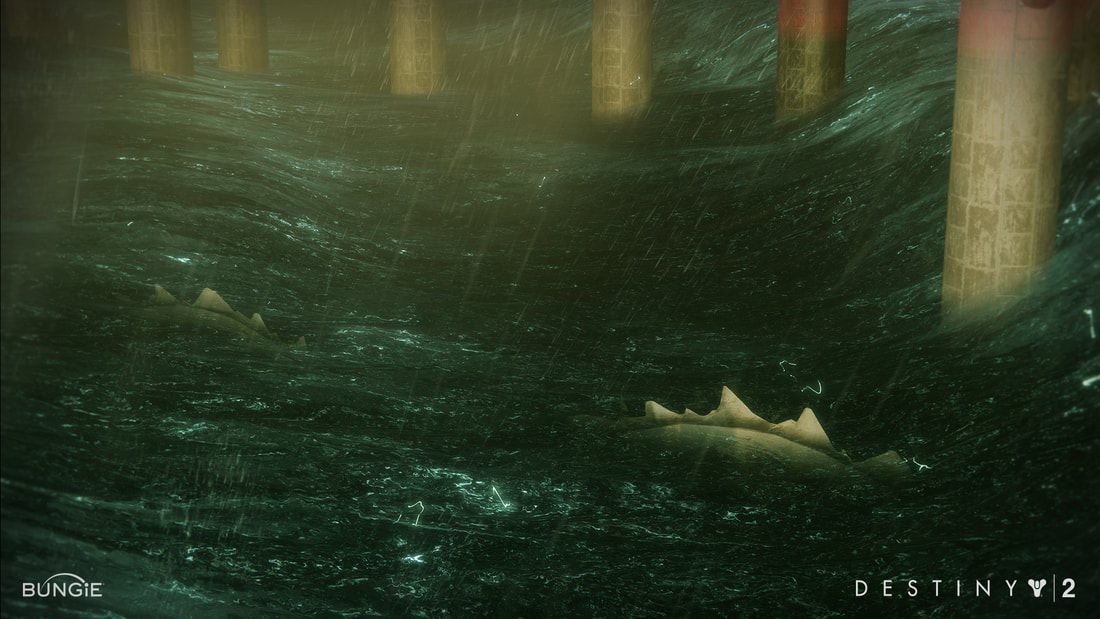
Two characters shipped: the owls in the Farm social space, and the sea monster visible from the Titan environment. Both went through the full character pipeline (concept reference, modeling, UV layout, rigging, skinning, and animation) and shipped in Destiny 2 at launch.
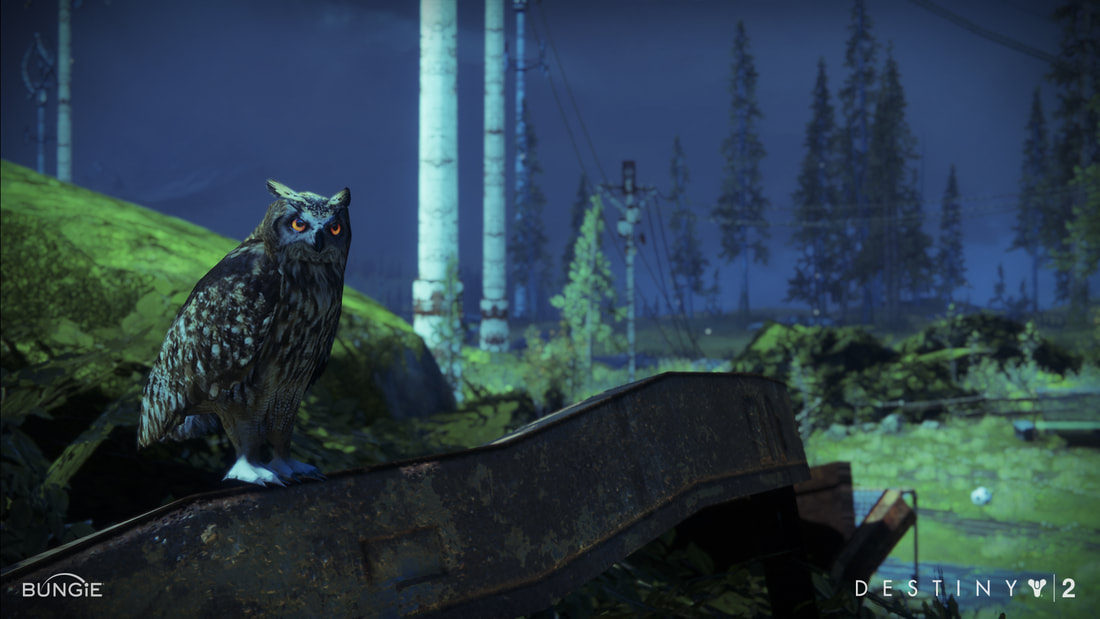

The owls needed to feel like real birds in a space that players would visit repeatedly, so the idle animations had to hold up to extended observation without reading as loops. The sea monster needed to feel massive and distant: the animation had to read clearly at the scale it was viewed from, on a creature that players would never get close to.
Prototype Work
Beyond the shipped characters, the project included two prototype pieces that didn't make the final game: a reactive NPC with custom animations and VFX that responded to player proximity, and an interactive beehive obstacle designed for a demo environment. The beehive had destruction states, a swarm VFX response, and gameplay-driven behavior hooks.
QA Engineering Work
The rest of my time at Bungie was as a QA and test engineer: mapping content workflows to find systemic failure points, analyzing runtime memory in high-risk areas, and building tools for the QA team. The debug config tool I built during this period let testers trigger public event completion at any reward tier on demand, enabling reward and audio testing that had previously been too time-consuming. The audio team picked it up independently; it was a pattern I'd see repeated later at Epic.